
What we do
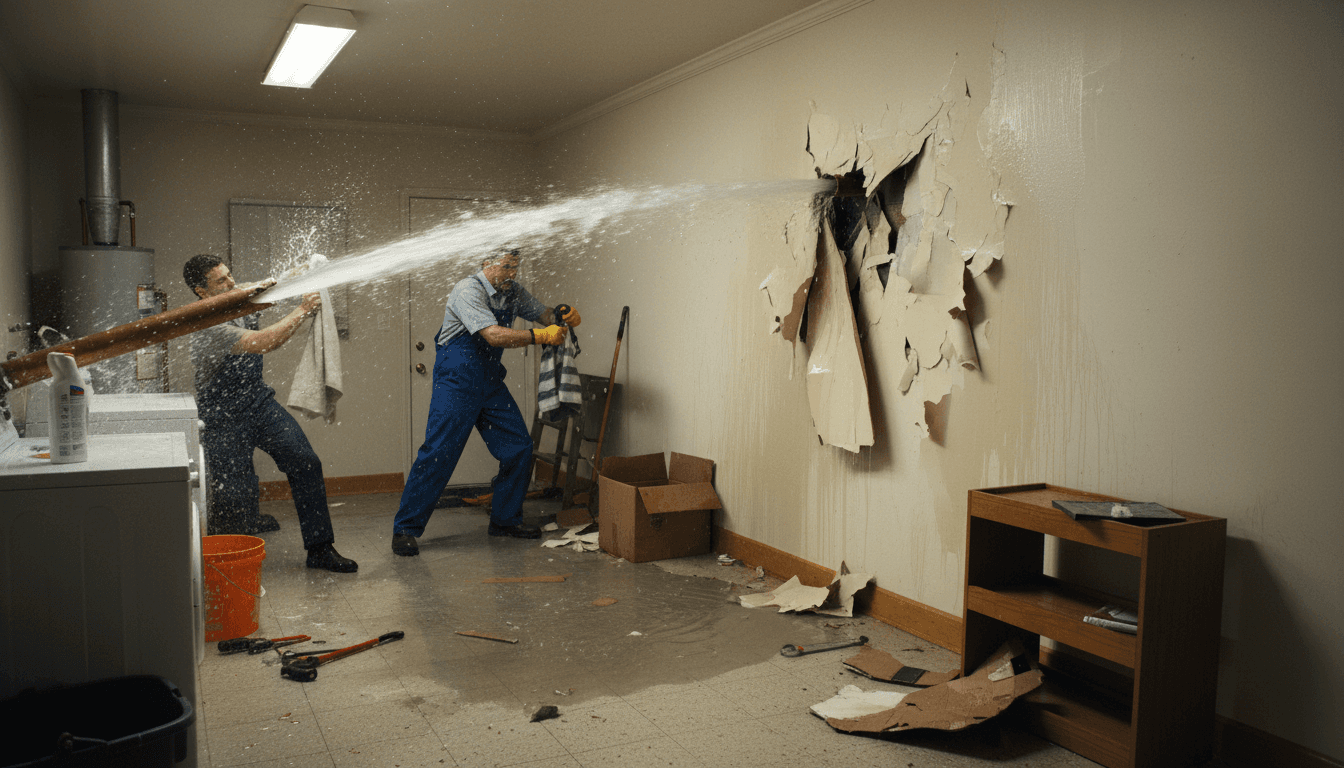
A burst pipe can release hundreds of gallons of water into your home in under an hour. A half-inch supply line operating at normal municipal pressure — around 60 PSI in most Nashville neighborhoods — pushes roughly eight gallons per minute through a clean break. That is 480 gallons per hour flooding into wall cavities, soaking through subfloors, and pooling in finished basements. The damage is immediate, and it compounds with every minute the water runs unchecked. When a pipe fails at 2 AM in a Sylvan Park bungalow or a Belle Meade colonial, the difference between a manageable cleanup and a full structural restoration is how quickly someone gets there to stop it.
Nashville's pipe infrastructure faces pressure from multiple directions. Homes built before 1970 — common in Germantown, Lockeland Springs, Inglewood, and Hillsboro Village — often still run on galvanized steel supply lines. These pipes corrode from the inside out over decades, thinning the walls until pressure or vibration triggers a failure. Homes built in the 1990s and 2000s may have polybutylene supply lines, a material with a known history of premature failure at fittings and joints. And every Nashville winter brings at least a few nights where temperatures drop below 20 degrees, freezing exposed pipes in crawl spaces, exterior walls, and uninsulated attic runs. The January 2022 cold snap produced more burst-pipe calls in a single week than we typically see in an entire season.
Our burst pipe response begins before we arrive. When you call (931) 499-1177, our dispatch team walks you through locating and shutting off your main water valve — stopping the source is the single most important action you can take. If you cannot reach the valve or it will not turn (common in older homes where gate valves seize from disuse), we coordinate with Metro Water Services for an emergency street-side shutoff. Our crew arrives with extraction equipment and begins water removal immediately, even before the plumber finishes the pipe repair. We work in parallel — not in sequence — because every hour of standing water matters.
Once the water is out, we transition into structural drying. Burst pipe events typically produce Category 1 (clean) water, which means carpet, pad, and many building materials can often be dried in place rather than removed — saving significant cost compared to a flood or sewage event. However, water that has been standing for more than 48 hours, or water that has contacted soil in a crawl space, is reclassified to Category 2 or 3 and requires more aggressive treatment. Our technicians make that determination on-site using visual assessment and moisture readings, not guesswork.
We coordinate with licensed plumbers for the pipe repair itself — or if you have a plumber you prefer, we work alongside them. Our scope is the water damage: extraction, drying, demolition of damaged materials when necessary, and full documentation for your insurance claim. Most burst pipe events in Nashville are covered by standard homeowners insurance, and our documentation package — timestamped photos, daily moisture logs, equipment inventories, and a written scope of work — is formatted to streamline your adjuster's review.
What to expect
- 1
Emergency Shutoff
Our dispatch team guides you through shutting off your main water valve by phone. If the valve is inaccessible or seized, we coordinate with Metro Water Services for a street-side shutoff. Stopping the water source is the first priority.
- 2
Source Identification
On arrival, we locate the exact point of failure — burst supply line, failed fitting, frozen pipe, or corroded joint. This determines whether a plumber can repair in place or whether a section of pipe needs replacement.
- 3
Water Extraction
Extraction begins immediately and runs in parallel with plumbing repairs. Truck-mounted pumps and weighted extraction tools remove standing water from all affected areas, including wall cavities and subfloor spaces.
- 4
Pipe Repair Coordination
We work with licensed Nashville plumbers to complete the pipe repair. If you have a preferred plumber, we coordinate schedules. If not, we dispatch from our network of vetted, licensed contractors.
- 5
Structural Drying
Air movers and commercial dehumidifiers are placed according to IICRC drying standards. For burst pipe events with Category 1 water, many materials can be dried in place — reducing tear-out and rebuild costs significantly.
- 6
Damage Assessment & Documentation
Every affected area is documented with photos, moisture readings, and a written scope. This package is formatted for insurance adjusters and submitted within 48 hours of the initial response.