
What we do
A sewage backup is the most hazardous water damage event a homeowner can face. Raw sewage — classified as Category 3 or blackwater under the IICRC S500 standard — contains bacteria, viruses, parasites, and other pathogens that pose immediate health risks to anyone exposed. E. coli, Hepatitis A, giardia, and cryptosporidium are all present in municipal sewage. Direct contact, inhalation of contaminated aerosols, or even prolonged proximity without proper protection can cause serious illness. This is not a cleanup you attempt yourself with rubber gloves and a mop. It requires professional-grade containment, extraction, antimicrobial treatment, and verified clearance before the space is safe for reoccupation.
Nashville's sewer infrastructure is a mix of old and new, and the older portions are responsible for the majority of residential backups. Combined sewer systems in some of Nashville's established neighborhoods — Germantown, Salemtown, parts of North Nashville — carry both stormwater and sanitary sewage in the same pipe. During heavy rain events, these systems can overwhelm and push sewage back through floor drains, toilet connections, and even shower drains at the lowest point of the plumbing system. Homes with basements or below-grade bathrooms are the most vulnerable. Metro Water Services has invested heavily in infrastructure upgrades, but the reality is that aging clay pipe, root intrusion, and capacity limitations continue to cause backups across the metro area.
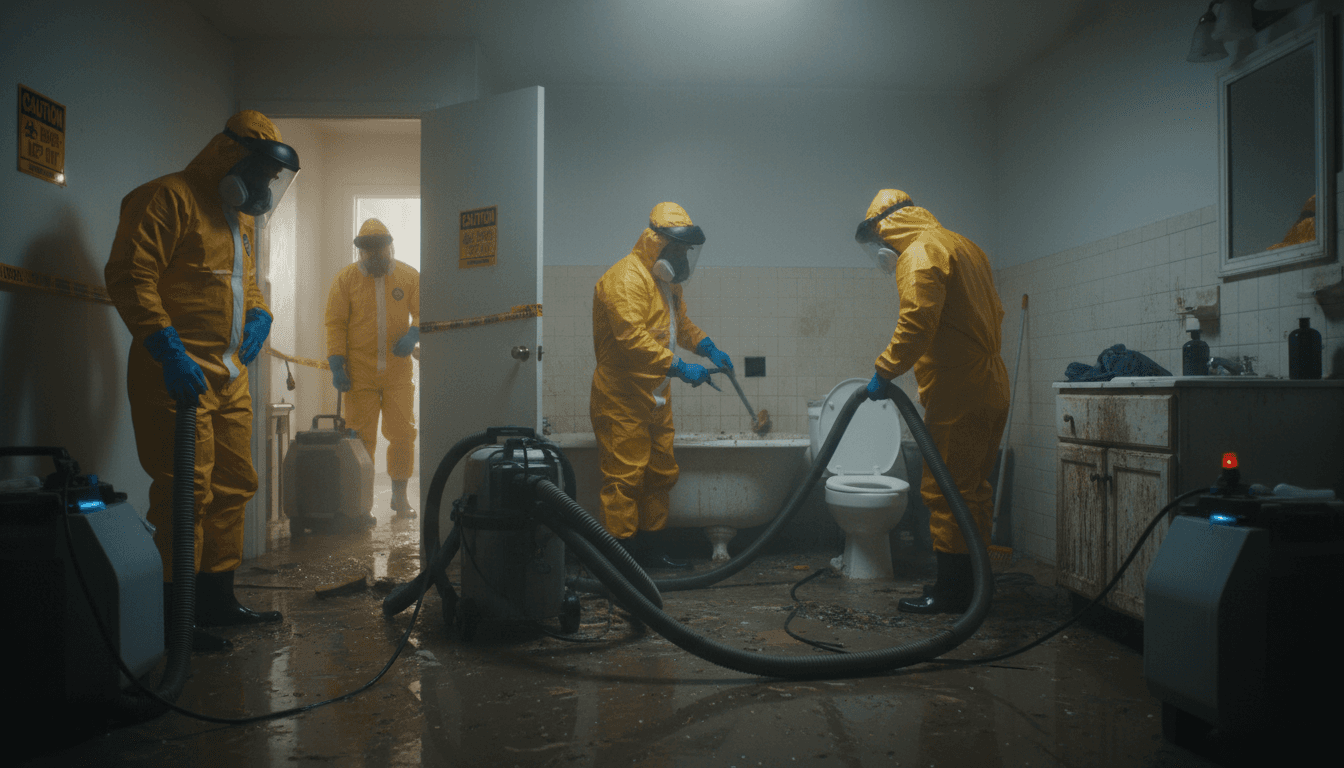
Our sewage cleanup protocol begins with a safety assessment. Before anyone enters the affected area, we verify ventilation, identify electrical hazards (standing sewage and live wiring are a lethal combination), and establish a containment perimeter to prevent cross-contamination into unaffected areas of the home. All crew members work in full PPE — Tyvek suits, N95 or higher respirators, nitrile gloves, and boot covers. We set up negative air pressure using HEPA-filtered air scrubbers to prevent contaminated air from migrating through the structure.
Extraction follows containment. We remove all standing sewage using truck-mounted pumps with dedicated wastewater handling. Once the liquid is out, every porous material that contacted sewage is removed: carpet, pad, drywall (cut a minimum of 24 inches above the contamination line), insulation, baseboards, and any particleboard or MDF cabinetry. These materials cannot be cleaned or dried — they are disposed of as biohazardous waste. Non-porous surfaces — concrete, tile, metal framing, and treated lumber — are scrubbed and treated with hospital-grade antimicrobial agents.
After treatment, we deploy commercial drying equipment and run it until all moisture readings are at or below dry standard. The final step is clearance: we verify air quality, take final moisture readings, and provide a written clearance report confirming the space meets habitability standards. Only then do we release the structure for rebuild. If your Nashville home experiences a sewage backup, evacuate the affected area, do not flush toilets or run water, and call us at (931) 499-1177. We respond to sewage emergencies 24/7, including holidays.
What to expect
- 1
Safety Assessment
Before entry, we assess ventilation, electrical hazards, and structural stability. A containment perimeter is established to isolate the affected area. Negative air pressure is set up with HEPA air scrubbers to prevent cross-contamination.
- 2
Containment
Polyethylene sheeting seals off the contaminated zone from the rest of the home. Air scrubbers maintain negative pressure inside the containment area. All crew members work in full PPE — Tyvek suits, respirators, gloves, and boot covers.
- 3
Sewage Extraction
Truck-mounted pumps with dedicated wastewater lines remove all standing sewage. Weighted extraction tools pull moisture from any remaining carpet or porous flooring before demolition begins.
- 4
Contaminated Material Removal
Drywall is cut 24 inches above the contamination line. All carpet, pad, insulation, baseboards, and porous cabinetry below that line is removed and bagged for biohazardous waste disposal. Nothing porous that touched sewage is saved.
- 5
Antimicrobial Treatment
Remaining structural surfaces — studs, subfloor, concrete — are scrubbed and treated with hospital-grade antimicrobial agents. HEPA air scrubbers continue running throughout the treatment and drying phases.
- 6
Clearance Testing
Final moisture readings, visual inspection, and air quality assessment confirm the space meets habitability standards. A written clearance report is provided before the structure is released for rebuild.