
What we do
Nashville sits squarely in the path of severe weather. The city averages over fifty thunderstorm days per year, and Middle Tennessee's position in Dixie Alley — the southeastern corridor of tornado activity — means that straight-line winds, hail, and tornadoes are not rare events but seasonal certainties. The March 3, 2020 tornado outbreak, which tore an EF-3 path through North Nashville, Germantown, East Nashville, Donelson, and Mt. Juliet, killed 25 people and damaged or destroyed over 3,000 structures. That event was a worst case, but the pattern it follows — severe storms tracking northeast through the metro after midnight — repeats every spring.
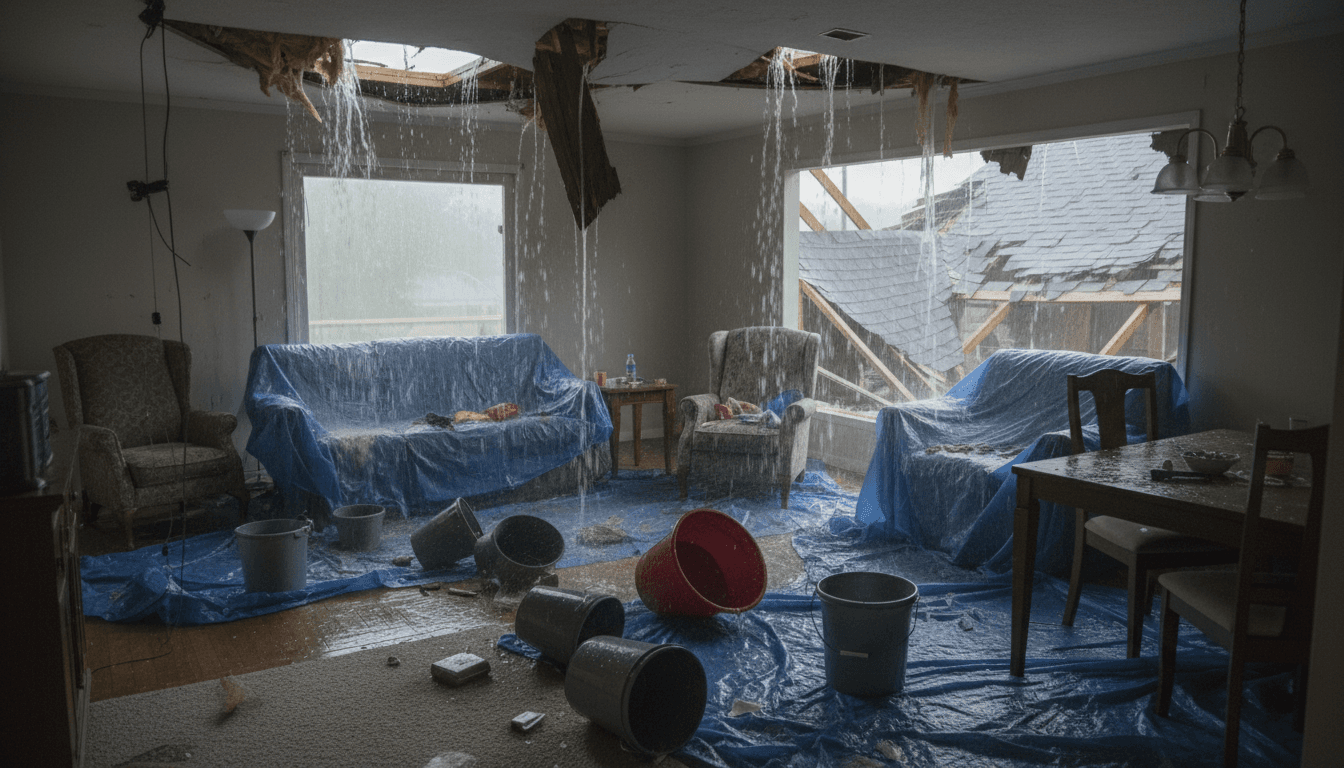
Storm damage to structures follows a predictable path: wind or debris compromises the building envelope (roof, windows, siding), and rain follows the opening into the interior. A single missing shingle section can admit dozens of gallons during a sustained storm. A broken window on the windward side pressurizes the interior and can peel additional roofing from the inside. Once water enters, it runs downhill — through attic insulation, into ceiling cavities, down wall framing, and onto floors below. The damage you see on the ceiling is usually the last stop, not the first. By the time a stain appears on drywall, insulation above it is saturated and framing has been wet for hours.
Our storm damage response starts with emergency board-up and tarping. Before we can address interior water damage, we have to stop new water from entering. Our crews carry plywood, tarps, and fastening systems sized for Nashville's residential roofing profiles. We secure every breach — missing shingles, broken windows, damaged siding, compromised flashing — to stabilize the structure against the next round of weather. In Nashville's spring storm season, a second cell can follow the first by hours, and an untarped opening will compound the original damage exponentially.
Once the envelope is secured, we move to interior water extraction and structural drying. Ceiling cavities are opened to release trapped water and expose wet insulation for removal. Wall cavities are checked with moisture meters and opened if readings indicate saturation behind the drywall. Flooring — particularly hardwood, which is everywhere in Nashville homes — receives immediate weighted extraction to minimize warping. Commercial air movers and dehumidifiers are placed throughout the structure, and we monitor drying progress daily until all readings are at or below dry standard.
Insurance documentation is critical after storm damage because multiple coverages may apply — wind, hail, water intrusion, debris impact, and sometimes separate flood coverage if rising water was also a factor. We photograph everything, log moisture readings with timestamps, and produce a detailed scope of work that maps each line item to the specific cause of loss. Our team has worked with every major insurance carrier in Tennessee and understands how adjusters evaluate storm claims in the Nashville market. We also coordinate with roofing contractors — yours or ours — so that permanent roof repair and interior restoration move in the right sequence and do not delay each other.
What to expect
- 1
Emergency Board-Up & Tarping
Crews secure the building envelope — roof tarps, plywood over broken windows, and temporary seals on damaged siding or flashing. The goal is to stop new water entry before the next weather event arrives.
- 2
Interior Water Extraction
Once the envelope is secure, truck-mounted pumps and extraction tools remove standing water from all interior surfaces. Ceiling cavities are opened to release trapped water. Saturated insulation is removed.
- 3
Damage Documentation
Every point of water entry and every area of interior damage is photographed and mapped. Moisture readings are taken at all affected surfaces. This documentation package is formatted for insurance adjusters and separates damage by cause of loss.
- 4
Insurance Coordination
We work directly with your insurance adjuster, providing the scope of work, photos, and moisture documentation they need to process your claim. We understand how Nashville-area adjusters evaluate storm claims and format our reports accordingly.
- 5
Structural Drying
Commercial air movers and dehumidifiers run until all moisture readings reach dry standard. For storm events, drying times depend on how long the structure was exposed before tarping — early tarping dramatically reduces drying time and total project cost.
- 6
Full Restoration
Removed drywall, insulation, flooring, and trim are rebuilt to pre-loss condition. We coordinate with roofing contractors so that permanent roof repair and interior work proceed in the right order without delays.